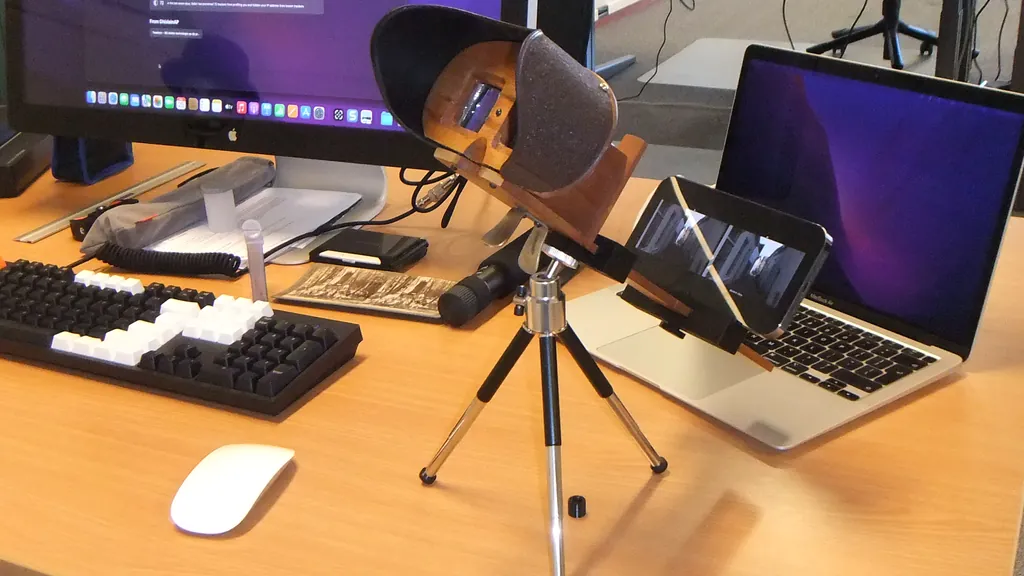
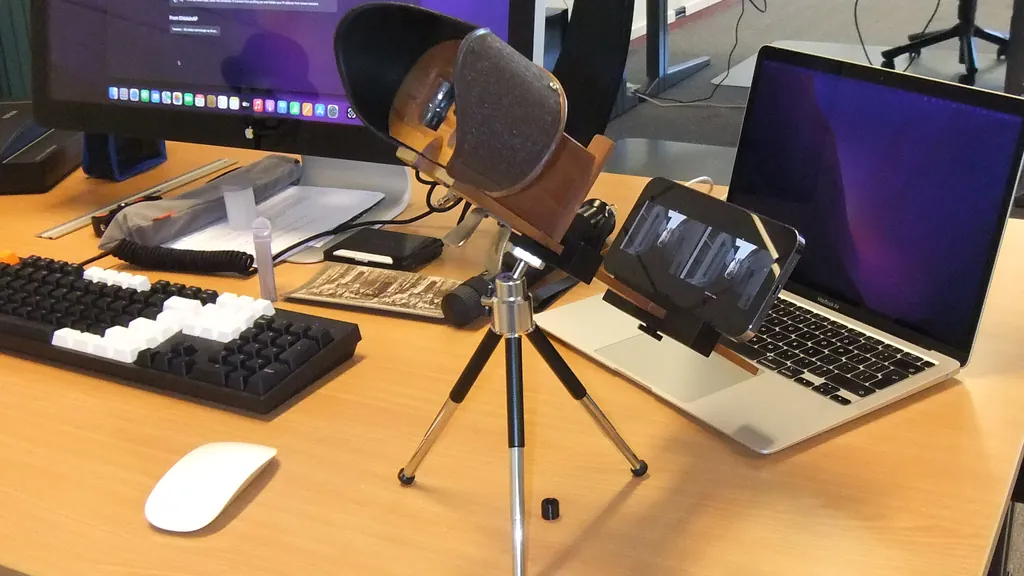
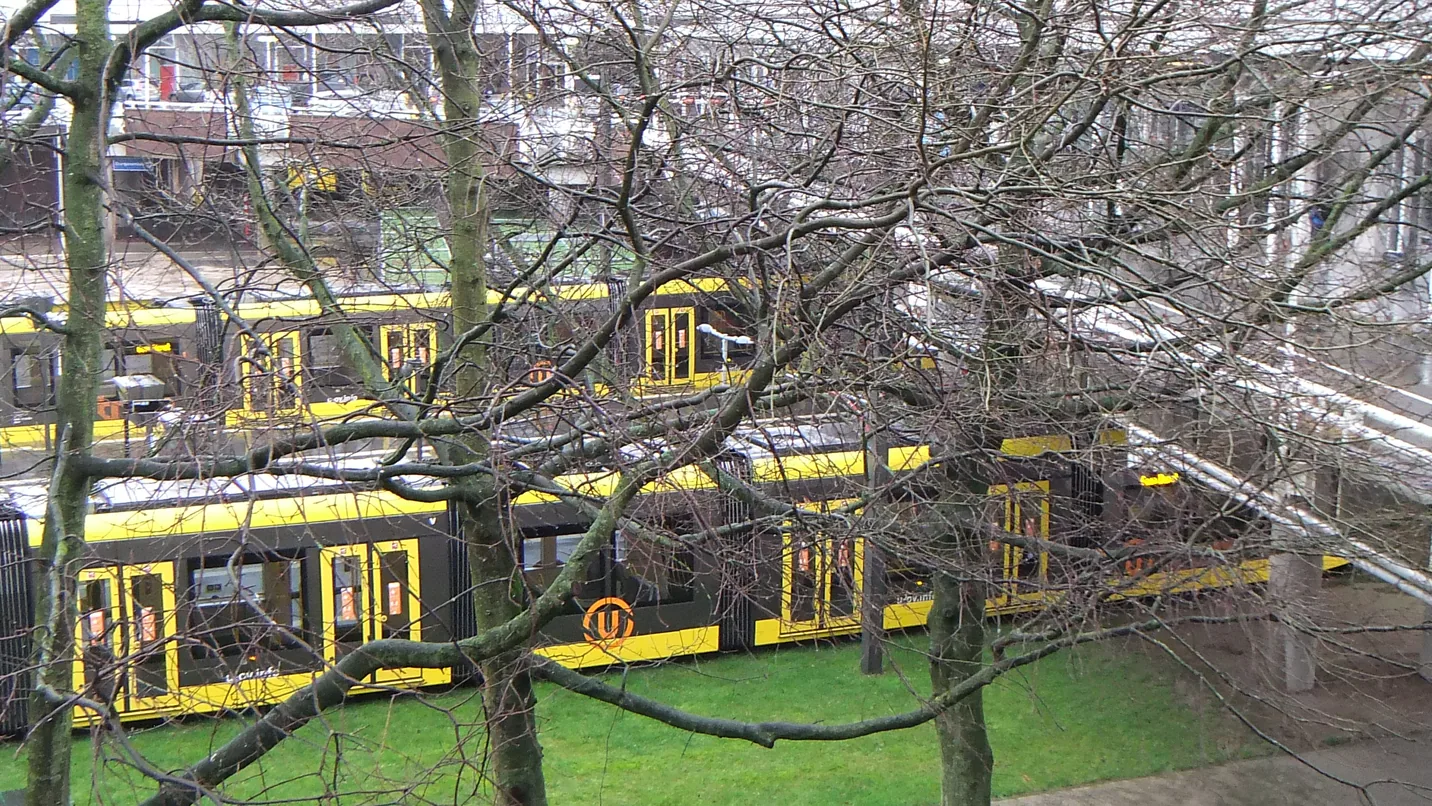
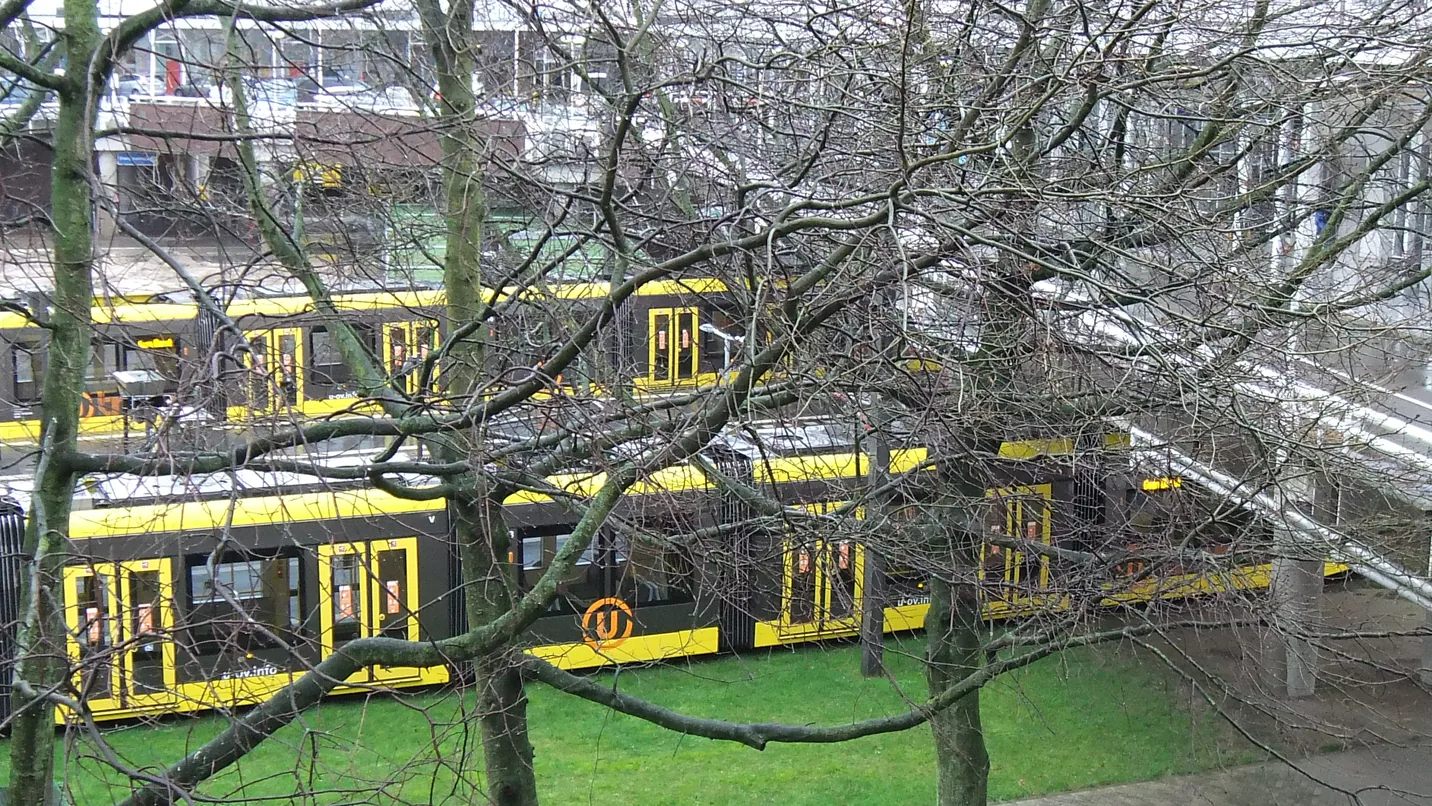
Stereo scopeStereo scopeStereo scopeStereoscope: stereography with a Holmes viewer, two 3D cameras and an iPhone
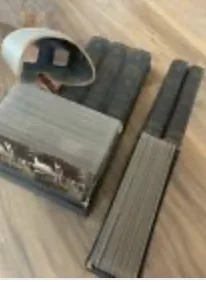
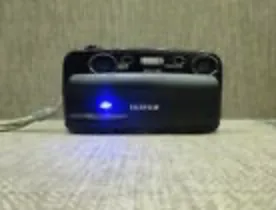
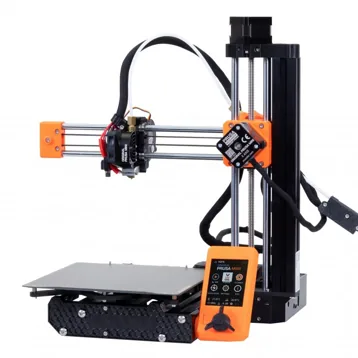
A Holmes viewer, a box of Keystone cards, two old 3D cameras, a 3D printer and an iPhone. Old technology meets new technology.
An iPhone on a Holmes viewer Own design · printed 2022
Now on the App Store
MPOViewer
Your MPO photos and 3D video on iPhone, straight from the camera, and on the TV for everyone in the room. No conversion step, no computer.
Side-by-side Preview · not the app UI
Two frames next to each other, the way a stereo card is printed. Free-view it or drop the phone into a viewer.
MPOViewer reads the MPO files your camera already writes (the stereoscopic format used by the Fujifilm FinePix W1 and W3, among others) and shows both frames the way you want to see them.
Those cameras shoot stereo video too, saved as an AVI holding two streams, one per eye. MPOViewer plays those as well, with their sound.
Whichever mode you pick, the pair is corrected first. The two frames are brought into line vertically, because no camera holds its two lenses exactly level, and the few pixels of height difference that leaves is something your eyes can only absorb by working at it. That is where the tiredness after a handful of photos comes from, and it is the one part of a pair you cannot fix by looking differently.
Then the pair is placed against the screen, so the nearest thing in the picture sits at the screen plane instead of hanging in front of it, which is often the difference between a pair your eyes settle into and one they fight. Both corrections follow into what you export, and any single photo can be shown as the camera shot it instead.
Shoot, open, look. The archive that used to live on a memory card or behind a desktop converter now travels in your pocket.
Free on the App Store, in English and Dutch; one purchase takes the watermark off your exports. No account, no analytics, and nothing leaves the phone. The one thing it ever fetches is a larger colour model for stereo cards, and only when you ask for it.
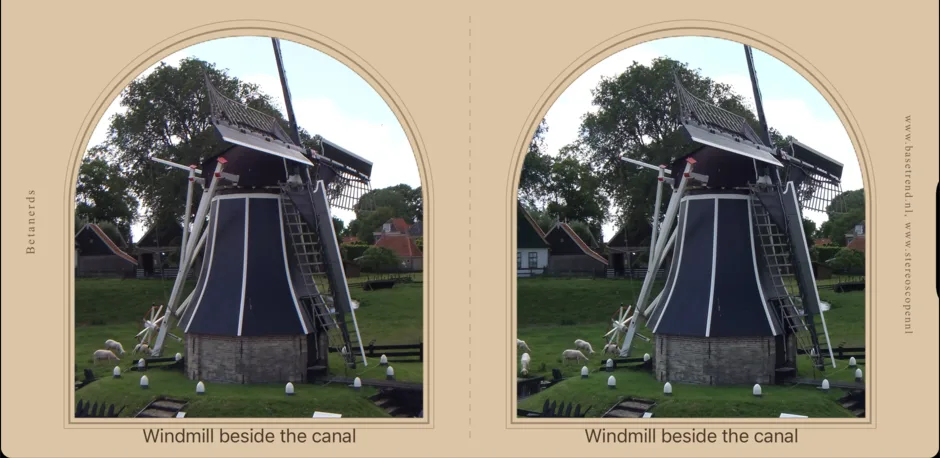
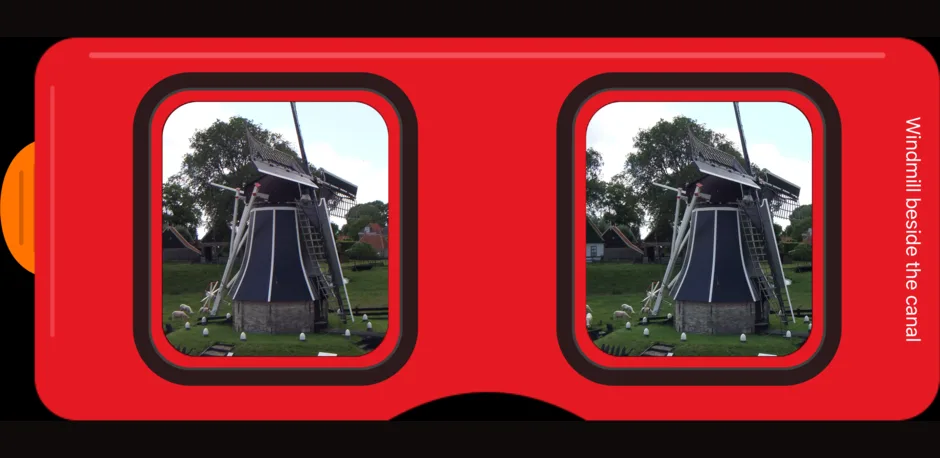
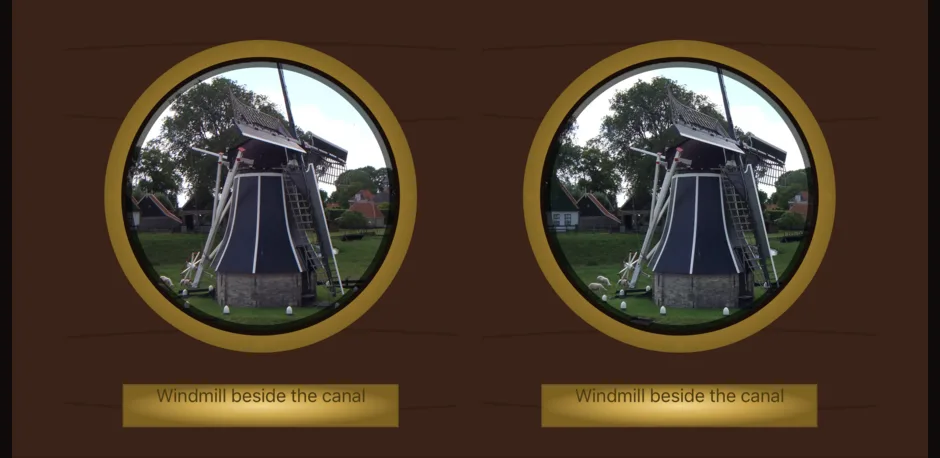
A pair does not have to float on a black screen. Drop it into a stereo card, a red viewer, a slide mount from the fifties, a magic-lantern plate, a panorama cabinet in walnut and brass, or a cardboard peep box. The frame shows while you look and it comes along into the export, for video clips as well as photos. Or leave the passepartouts alone and keep the plain border, which takes a colour of your choosing rather than the black it used to be; the caption takes a colour of its own, on the border and on the photo alike.
Underwood Stereo card
Viewmaster Viewer
Kaiserpanorama Viewing cabinet
Old stereo cards, ready made pairs and anaglyphs
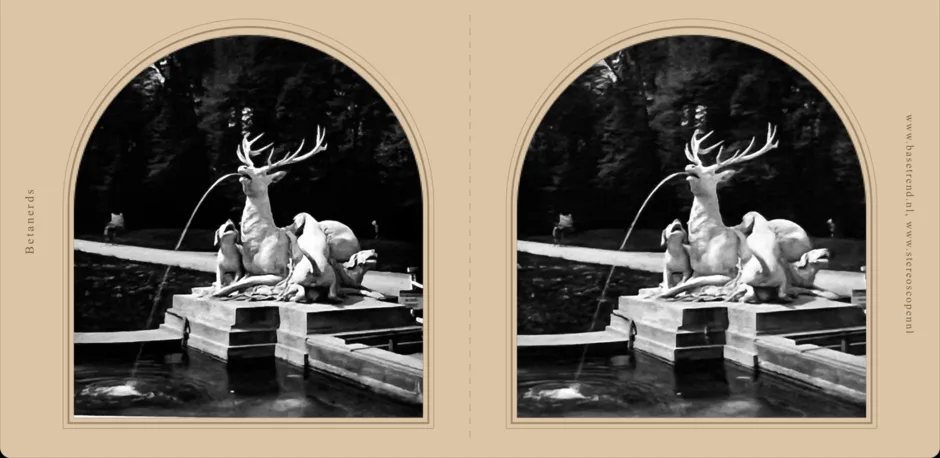
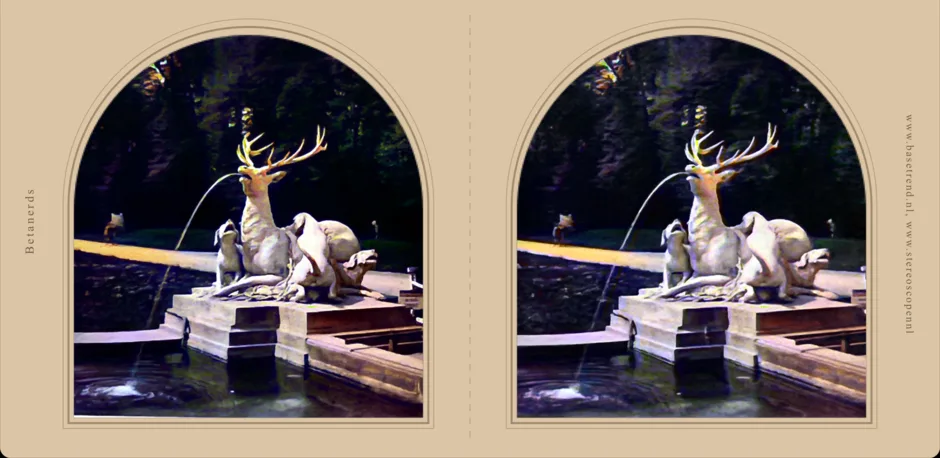
A box of Keystone or Underwood cards from a century ago is a box of stereo pairs, and MPOViewer reads them the way it reads the camera's files. Photograph a card, or pick a scan from Files, and the two prints are found by their edges on any mount, grey, black or white, straightened, put upright and registered on each other, with the grey of a grey mount taking the yellow of the lamp out. Every card in the list then carries its own three buttons: turn it over, put the light back, or save it without colour. A print the lamp coloured past what a white balance can undo is dealt with on its own, rather than by converting the whole batch a second time. The title under the prints becomes the caption. The result is an MPO in your library, in every mode and every frame the app has, and the card itself is never touched.
Or take that photograph in the app: put the card inside the frame drawn on the preview, wait for its edge to go green, and one tap on the shutter takes it. The pair it made stands still on the screen: keep it, or try again. Once a card is in the library, the palette in the viewer colours it with a machine learning model that runs on the phone, for as long as you are looking. The model sees the left print and its colour is laid on both prints at their own lightness, so the depth stays. A small model is built in; two larger ones, one warm and one true to life, can be downloaded once from Settings.
A picture that already holds the pair, side by side, goes in through the same door, and so does an anaglyph for red and cyan glasses: that one the app takes back apart into its two views, in grey, with the depth unchanged, so a picture that needed the glasses becomes a pair you can look at in any mode. It works out for itself which of the three it is looking at and finds the two halves in whatever mount they arrived in. Every row says what it decided; two buttons offer the other kinds, a third swaps the eyes when the depth reads inside out, and one more cuts a picture down the middle when nothing else fits, on your word. Tap a row to see it large, or in the mode you view in, and a tick on the row leaves it out of the import.
As printed A stag fountain, in black and white
In colour The same card, coloured with Vivid
Watching together
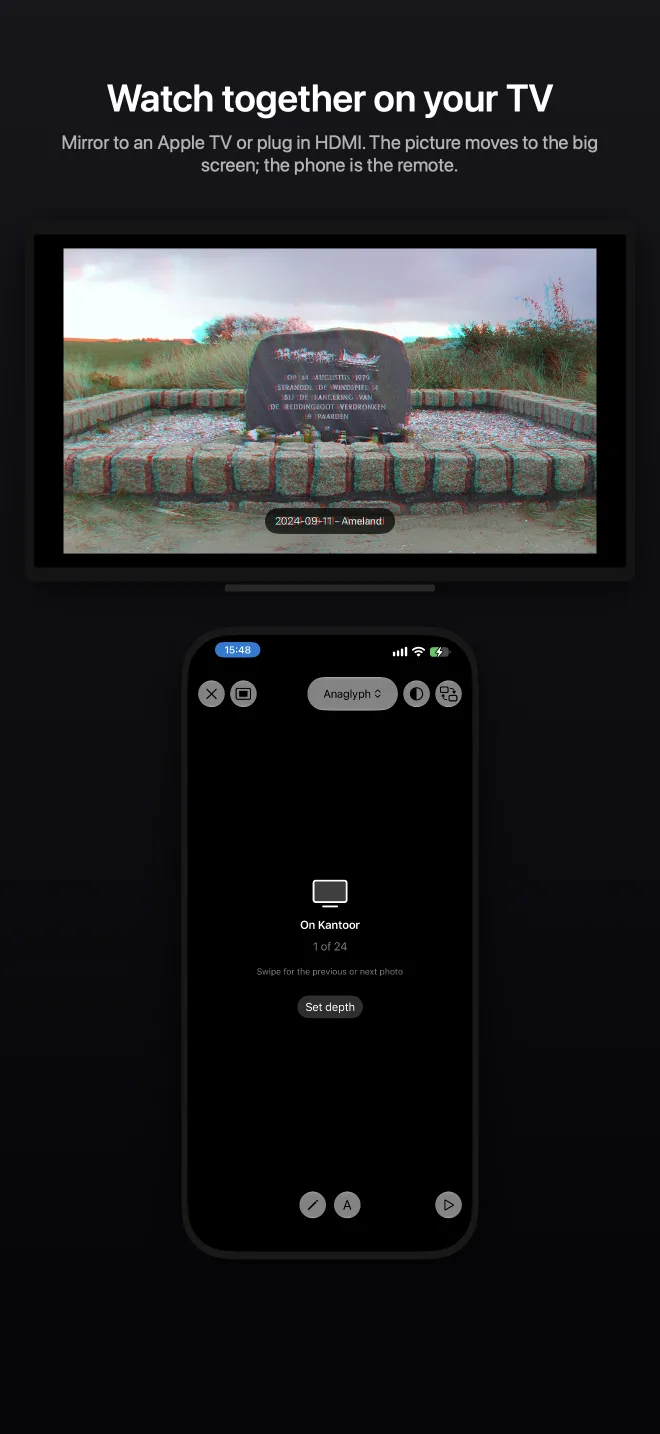
A few red/cyan glasses and a television make a stereo evening for the whole room. Mirror the iPhone to an Apple TV or an AirPlay television from Control Centre, or plug in an HDMI cable, and the anaglyph or wiggle moves to the big screen without the buttons; the phone becomes the remote. Swipe for the next photo, run a slideshow, play a clip with its sound through the TV, and hand the phone to someone else.
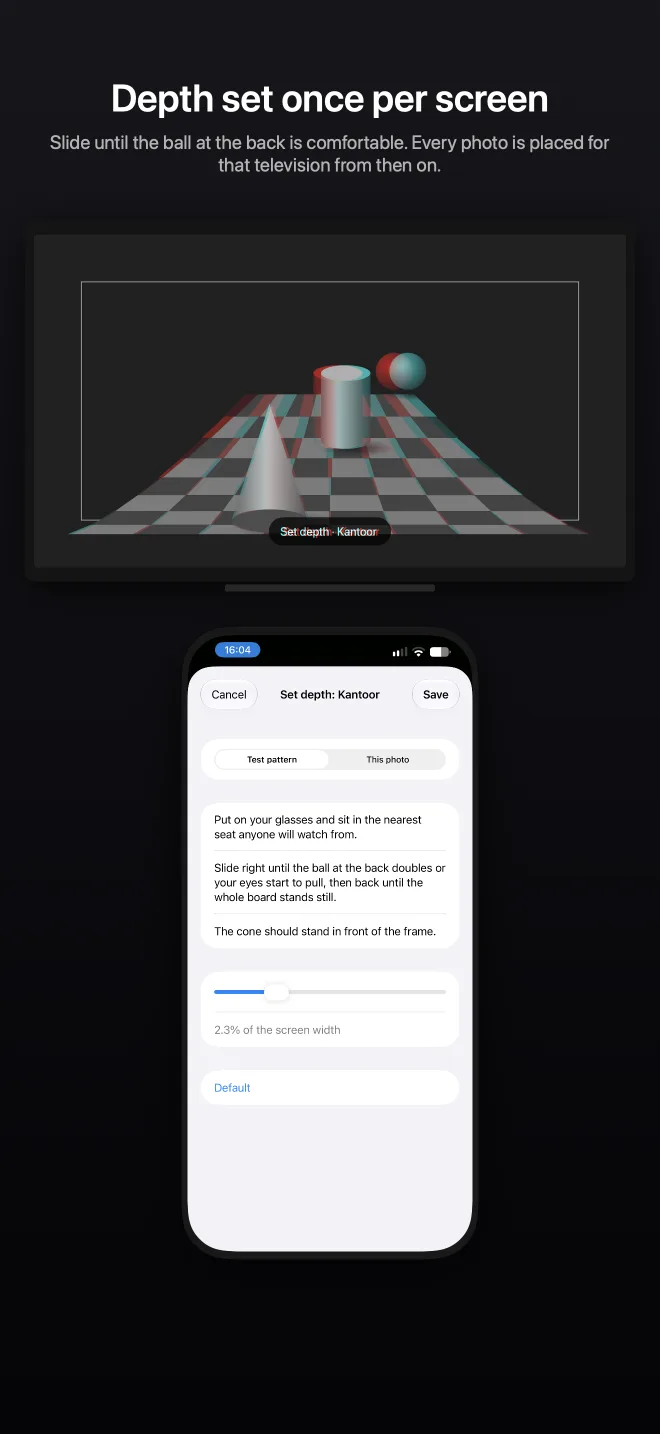
A big screen wants its own depth, because the same picture is fifteen times wider than on the phone and the eyes have further to travel. So the depth is set once per television: open a photo on the TV, tap Set depth, and slide until the background is comfortable while the picture follows the slider on the screen. The app remembers that screen and places every photo for it from then on, nearest thing on the screen, farthest never further than you set. A test pattern with a chessboard and three pieces is there for when no photo is open. Captions grow to a size you read from the sofa.
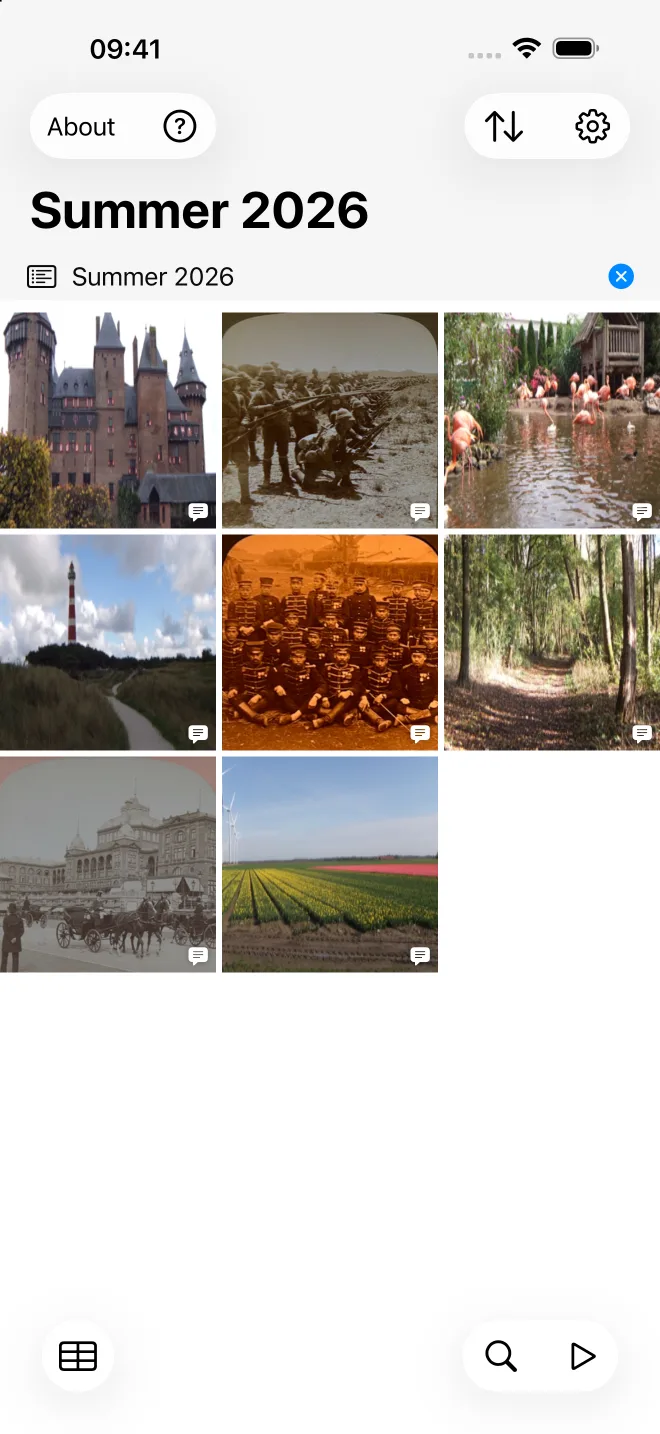
An evening wants a programme. Select the photos and clips for it in the library and save them as a playlist; choose it and the library shows just that list, in your order, which you change by dragging one photo onto another. On the TV the playlist plays from the start or shuffled, each clip to its end, and the phone shows where you are in it. Keep one list per box of cards, one per holiday, one for the grandchildren, and the same library serves every evening without a search.
On the TV The phone is the remote
Set depth Once per screen
A playlist The library, in your order
Viewing modes
Comfortable depth brings the two frames into line vertically and places the pair against the screen before you see it, in all six modes and in your exports. On by default, off per photo or altogether
Side-by-side and cross-eye for classic free-viewing
Cardboard puts each frame on the lens of a cheap cardboard or plastic VR viewer and bends it beforehand, so the lenses straighten it out again. The lens spacing in millimetres and the amount of bend are yours to set, by eye, through your own viewer
Anaglyph in four colour pairs (red/cyan, magenta/green, amber/blue, red/blue), each with a channel swap for your glasses and ghost reduction to keep edges from showing through
Wiggle, the two frames flicking back and forth, on a timer or as you tilt the device
Depthexperimental built from both photos: at rest the phone sits halfway between the two eyes, a tilt to one side is the left photo as shot, to the other the right, and every view in between is put together from both
Video plays in the first four modes; wiggle and depth are built from a still pair, so they stay photo-only
Your library
Organise photos by folder, backed by iCloud
Grid and table views, searchable by filename or caption
Clips sit alongside the photos, marked with a play badge
An info panel with what the camera recorded (lens, aperture, shutter, ISO) and a map when the photo carries a location
Captions you edit on the spot, kept by the app itself rather than in a file among your photos, and Settings writes them out to the folder or reads them back in
Focus points to line your eyes up, and zoom with automatic disparity correction
Hold a thumbnail to hide a photo or clip, or select several at once. Hidden in the sort menu shows what you hid and puts any of it back, and Settings can put that list behind Face ID, Touch ID or your passcode. The file stays where it is: MPOViewer never moves, renames or deletes your photos or clips
Select photos and clips and save them as a playlist. Choose one and the library shows just that list, in your order: drag a photo onto another to change it, in the grid or the list. Play it from the start or shuffled; clips play to their end
Share and export
Side-by-side, cross-eye and anaglyph as PNG or JPEG, frame and caption included
Cardboard as the plain pair, so what you send works in anyone's viewer rather than only in yours
Wiggle as an animated GIF or a cross-faded MP4, depth as a tilt-sweep MP4
A clip as MP4 at three sizes, with its original sound or without it, or a single frame as a photo
Every export carries the comfortable placement, unless you asked to see that photo as the camera shot it
Mark a start and an end and only that stretch is exported
Slideshow mode for running through a folder or a playlist, on the phone or on the TV
Made to be usable
VoiceOver reads out the library, and names what is on screen in the viewer
Reduce Motion turns wiggle and depth into something you steer by tilting
Cannot fuse a stereo pair? Wiggle and depth work with one eye
Settings on one screen, with a search field that finds any setting by its name or its explanation
A Help button with every icon in the app and one sentence on what it does
Usable at the largest text sizes, in English and Dutch
And an Android version, in the making
MPOViewer is being built for Android as well. The same six modes, the same passepartouts, the same stereo cards and clips, out of the same decisions rather than a second app that merely looks alike. It already runs and does nearly everything the iPhone version does, but it is not in the Play Store yet and there is no date for it. Every feature lands on the iPhone first and follows on Android, so the two stay one app with two builds.
About
How it started
A viewer, a box of cards, and one idea too many.
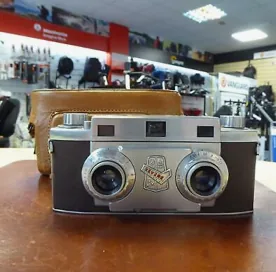
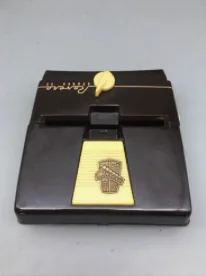
In 2021 I picked up a Holmes stereoviewer and a box of Keystone and Underwood stereographs. Looking through it felt like travelling back in time, in real 3D. It was stunning. I went hunting for an old camera so I could shoot stereographs myself, found a Revere 33, and later a Revere 22 viewer, which I cleaned up and fitted with a working bulb.
The collection kept growing. Then I came across the Library of Congress stereograph collection, and an idea took hold: what if I could view those scans on my iPhone, straight through the old Holmes viewer? All I needed was a holder. My Original Prusa Mini had been sitting idle for months, so I started designing, and the iPhone 13 Pro Max holder came out of it. The viewer got heavy after a while, so a tripod mount followed. Now I can sit at the kitchen table and watch hundred-year-old stereographs.
While reading up on stereography I found out that Fujifilm once built a digital 3D camera, so I tracked down a good one on eBay. Suddenly I could shoot 3D myself, but the photos could only be viewed on the camera. The one converter I found ran on Windows, and I work on a Mac. Time to put my development skills to use: a command-line tool that reads both frames from an MPO file, stitches them together and writes out the result. That became version 1.0 of MPOSplitter. I kept adding options, released it, and eventually the same itch turned into MPOViewer for iOS.
Software
MPOSplitter
Turns an MPO file into a side-by-side JPEG you can actually look at. On the desktop, from the command line.
The Fujifilm FinePix Real 3D writes MPO files. One MPO holds two JPEGs: one for the left eye, one for the right. To view them through an old stereoviewer, the two frames have to become a single side-by-side image.
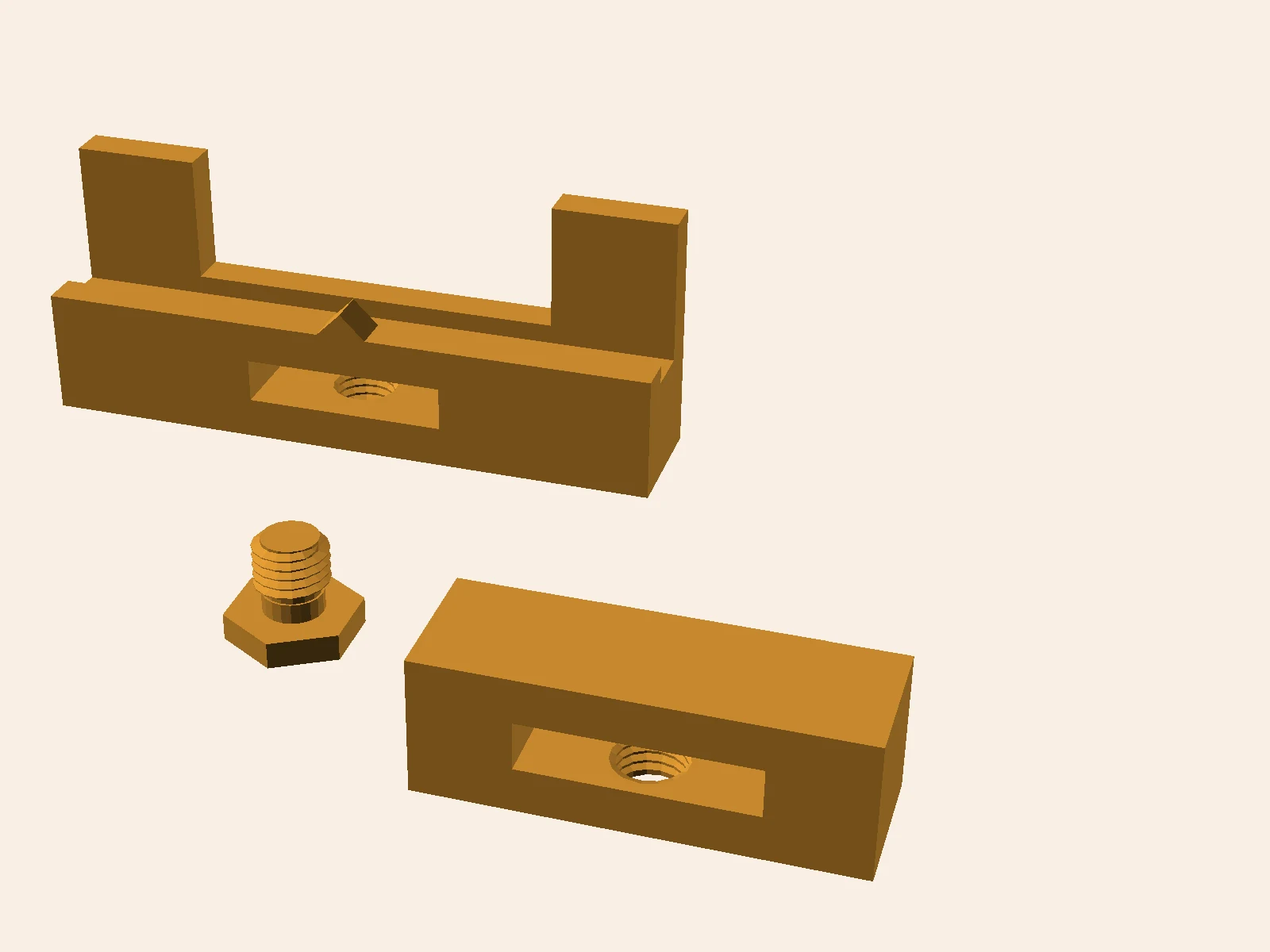
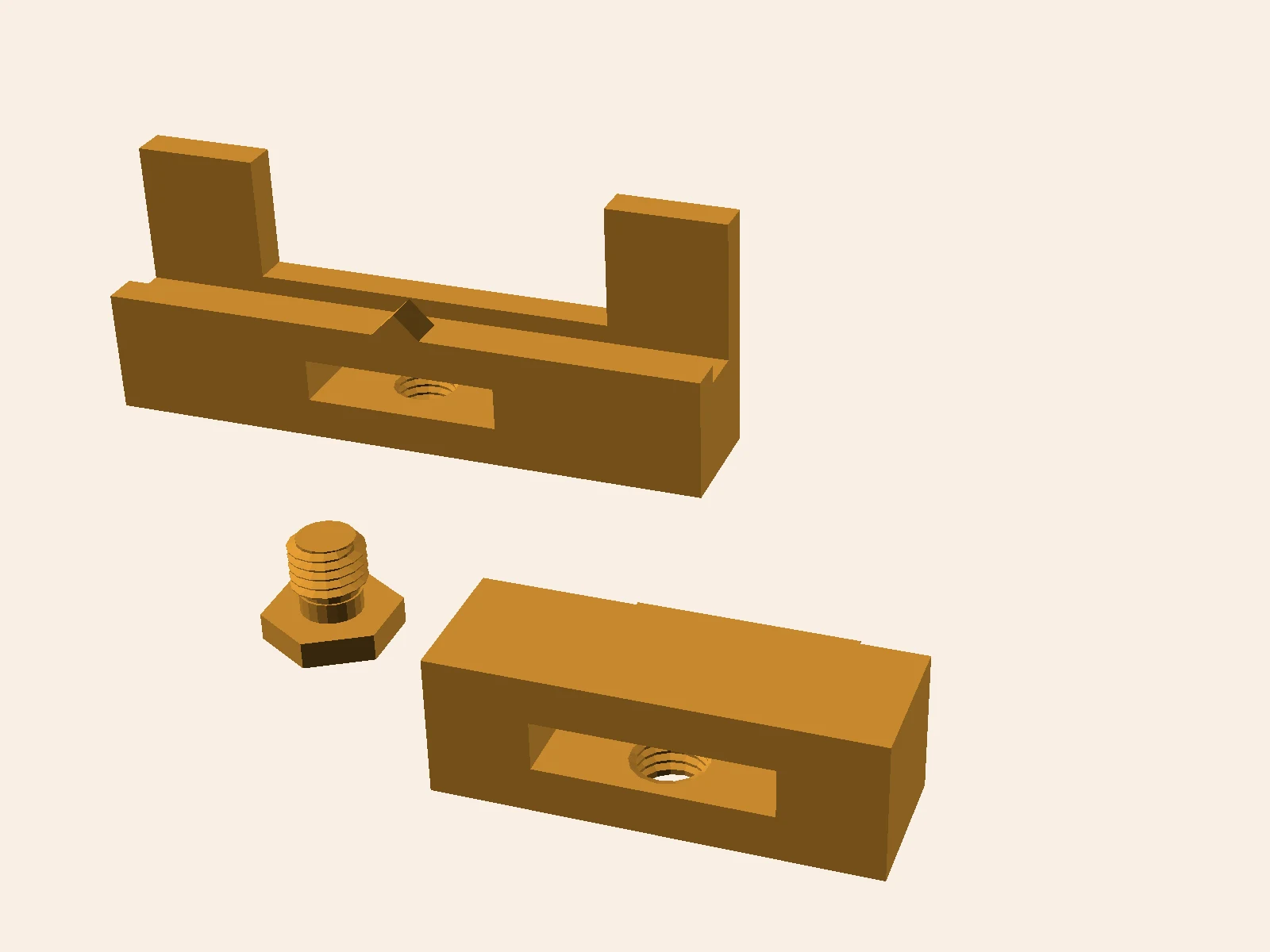
Two printed parts that turn a phone and a 130-year-old viewer into one instrument.
Holder, bolt and tripod mount Rendered from the STL · Prusa Mini
You can view side-by-side images straight from your phone: lay it in landscape on the right spot of the stereoviewer and look. Holding both up for long stretches gets tiring, so the holder and the viewer sit on a tripod instead.
The Library of Congress has thousands of them, and they fit your viewer.
The iPhone app LOC Collections searches the archive. Type stereo followed by your subject, open a result, drop the phone into your viewer setup and look.
Search stereo Netherlands and you get a list of historic Dutch stereographs, ready to view in 3D.